Good posture is key to overall health and well-being. It not only prevents back and neck pain but also helps to maintain the body’s alignment, promoting comfort and reducing fatigue. Whether you spend most of your day sitting at a desk, standing for long hours, or carrying heavy loads, these seven yoga poses will help you correct your posture and achieve better alignment.
Yoga has been practiced for centuries, and its benefits extend beyond flexibility and relaxation. Incorporating specific yoga poses into your routine can help strengthen muscles, enhance your awareness of body alignment, and improve posture. These poses work on different parts of the body to lengthen and open up muscles, ensuring that you hold a more natural, upright stance.
1. Mountain Pose (Tadasana)
Mountain Pose is often considered the foundation for all standing poses. It may seem simple, but it’s an excellent posture corrector. Standing tall, with feet together, shoulders relaxed, and weight evenly distributed across both feet, Tadasana teaches you how to engage your core and lengthen your spine. This pose reminds you of proper alignment from head to toe.
How to do it:
- Stand with your feet together, arms at your sides, and palms facing forward.
- Engage your legs, lift through the arches of your feet, and slightly lift your chest.
- Reach your arms upward while keeping your shoulders relaxed.
- Hold for 30 seconds to 1 minute.
2. Downward Dog (Adho Mukha Svanasana)
Downward Dog helps to stretch and strengthen the entire body. It opens the chest and lengthens the spine, correcting slouching and rounded shoulders. This pose also strengthens the arms, shoulders, and legs, contributing to a more balanced and aligned posture.
How to do it:
- Start on your hands and knees, with your hands shoulder-width apart and knees hip-width apart.
- Tuck your toes and lift your hips toward the ceiling, forming an inverted V-shape.
- Keep your arms straight and your feet flat on the floor.
- Hold for 30 seconds to 1 minute, focusing on lengthening your spine and pressing your heels toward the ground.
3. Cat-Cow Pose (Marjaryasana-Bitilasana)
The Cat-Cow Pose is an excellent way to increase flexibility in the spine and reduce tension in the back. This flow between two poses helps release tightness in the shoulders, spine, and neck, promoting better posture.
How to do it:
- Begin on your hands and knees, with your wrists directly beneath your shoulders and knees under your hips.
- As you inhale, drop your belly toward the floor (Cow Pose), lifting your head and tailbone.
- As you exhale, round your back (Cat Pose), tucking your chin toward your chest.
- Repeat for 5-10 rounds, moving with your breath.
4. Cobra Pose (Bhujangasana)
Cobra Pose strengthens the muscles of the lower back and opens the chest, helping to counteract the effects of slouching. By lifting the chest off the floor, this pose encourages proper spinal extension and improves posture.
How to do it:
- Lie face down on your mat with your hands under your shoulders, elbows close to your body.
- Press your feet into the mat while gently lifting your chest off the ground, extending your arms straight.
- Keep your elbows slightly bent and your shoulders relaxed.
- Hold for 20-30 seconds and repeat 2-3 times.
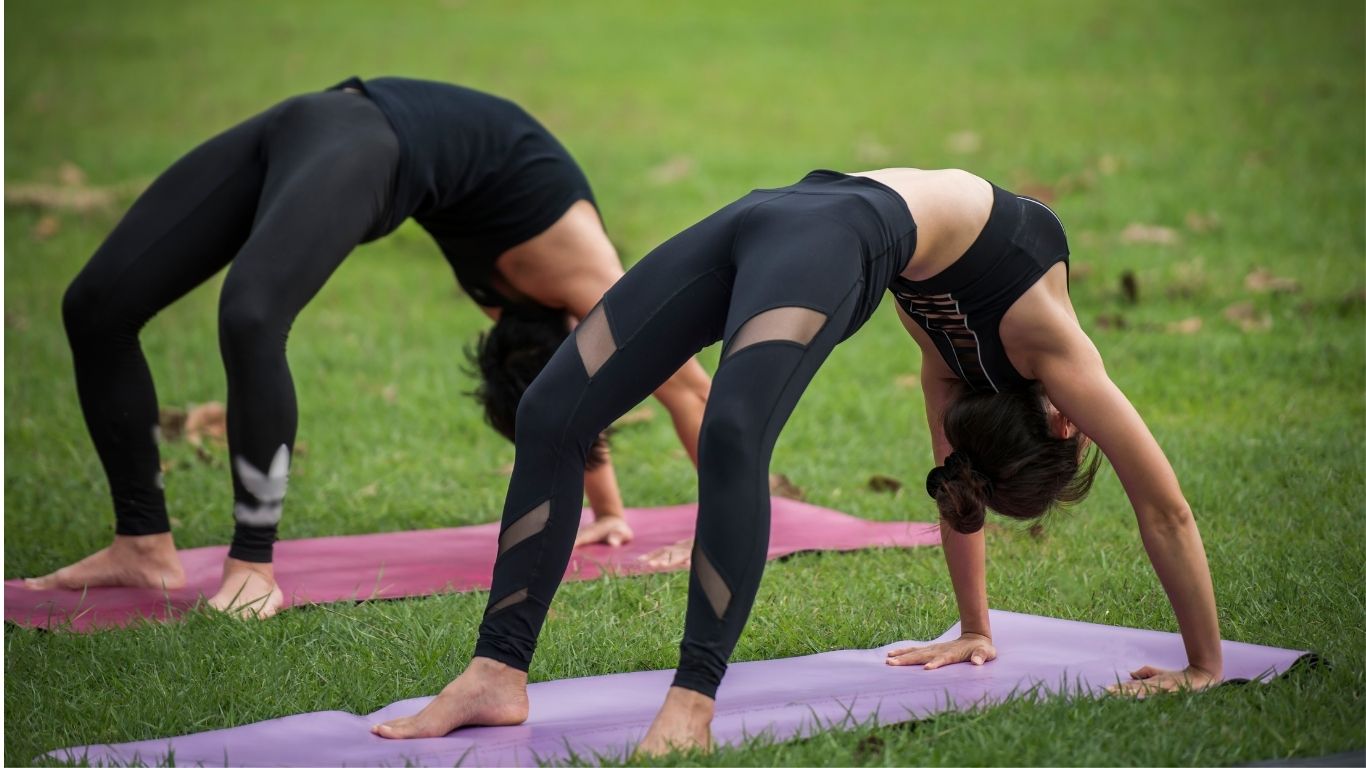
5. Bridge Pose (Setu Bandhasana)
Bridge Pose strengthens the glutes, lower back, and core, helping to improve pelvic alignment and reduce lower back discomfort. It also stretches the chest and opens the shoulders, encouraging a more upright and open posture.
How to do it:
- Lie on your back with your knees bent and feet flat on the floor, hip-width apart.
- Press your feet into the ground, lift your hips towards the ceiling, and clasp your hands underneath your back.
- Hold for 20-30 seconds and lower back down slowly.
- Repeat 3-5 times.
6. Warrior II (Virabhadrasana II)
Warrior II helps improve posture by strengthening the legs, core, and back. This pose encourages a long, upright spine and proper alignment through the shoulders and hips.
How to do it:
- Stand with your feet wide apart, turning your left foot outward and your right foot slightly inward.
- Bend your left knee to 90 degrees, keeping your right leg straight.
- Extend your arms out to the sides, palms facing down.
- Keep your chest open, shoulders relaxed, and gaze forward.
- Hold for 30 seconds and switch sides.
7. Seated Forward Fold (Paschimottanasana)
Seated Forward Fold stretches the hamstrings, back, and spine, helping to release tension from the lower back. This pose encourages a neutral spine and proper posture by targeting tight muscles that can cause slumping.
How to do it:
- Sit on the floor with your legs extended in front of you, feet flexed.
- Inhale, lengthen your spine, and exhale as you fold forward, reaching for your feet.
- Keep your back flat, avoiding rounding the spine.
- Hold for 30 seconds to 1 minute, then gently release.
FAQ
1. How often should I practice these yoga poses for better posture?
You can practice these poses daily or at least 3-4 times a week for noticeable improvement. Regular practice will help build strength and flexibility, leading to better posture and alignment over time.
2. Can yoga fix my posture permanently?
While yoga can significantly improve your posture, it requires consistency. It’s essential to incorporate yoga poses into your daily routine, along with being mindful of your posture throughout the day. Posture improvements may take time, so patience is key.
3. What other habits can help improve my posture?
Along with yoga, it’s important to maintain ergonomic habits at work, such as sitting with your feet flat on the floor, keeping your back straight, and using a chair that supports the natural curve of your spine. Taking regular breaks and walking around also helps.
4. Can yoga help with neck and back pain caused by bad posture?
Yes, yoga is highly effective in relieving neck and back pain. Poses like Cobra and Downward Dog help stretch and strengthen muscles that are often tight due to poor posture. Yoga can help reduce pain and prevent it from recurring.
5. Are there any yoga poses that should be avoided if I have bad posture?
If you have poor posture and are dealing with pain, it’s best to avoid poses that may exacerbate the issue, such as deep backbends or poses that place too much strain on the neck or lower back. It’s always a good idea to consult a yoga instructor or a healthcare provider to ensure you’re practicing safely.