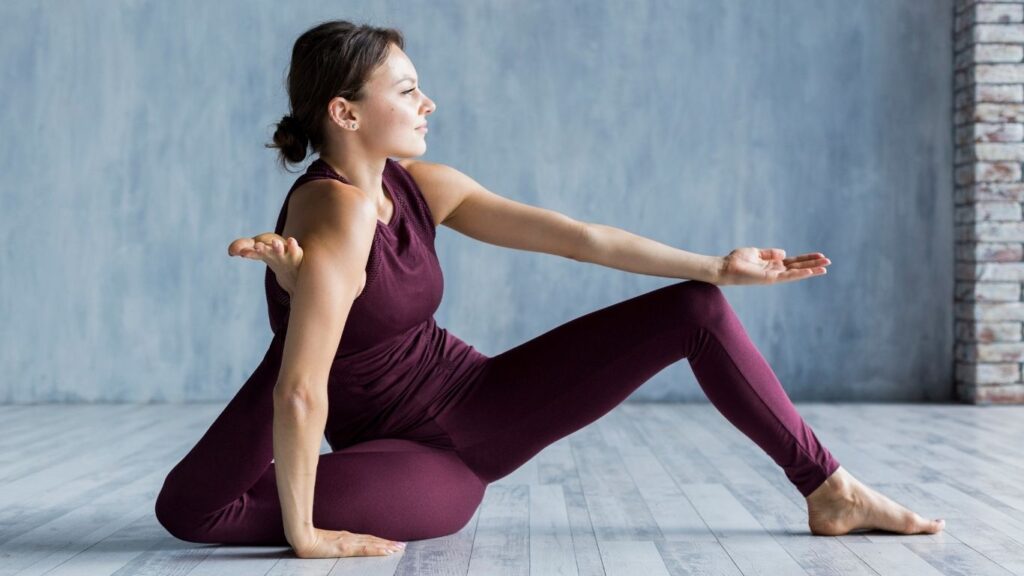
Balance and stability are essential for overall physical health. Whether you’re practicing yoga for fitness, rehabilitation, or mental focus, working on your balance can help you avoid injuries and improve your posture. In this article, we will explore ten yoga poses specifically designed to strengthen your balance and stability.
1. Tree Pose (Vrikshasana)
The Tree Pose is one of the most iconic balance poses in yoga. It challenges your stability by requiring you to stand on one leg while keeping your body tall and aligned.
How to do it:
- Stand with your feet together and arms by your sides.
- Shift your weight onto one leg, and lift the other leg, placing the sole of your foot on your inner thigh or calf (avoid the knee).
- Bring your palms together in front of your chest or extend your arms above your head.
- Focus on a point ahead to help maintain your balance.
Benefits: This pose strengthens the legs, core, and ankles while improving mental focus and concentration.
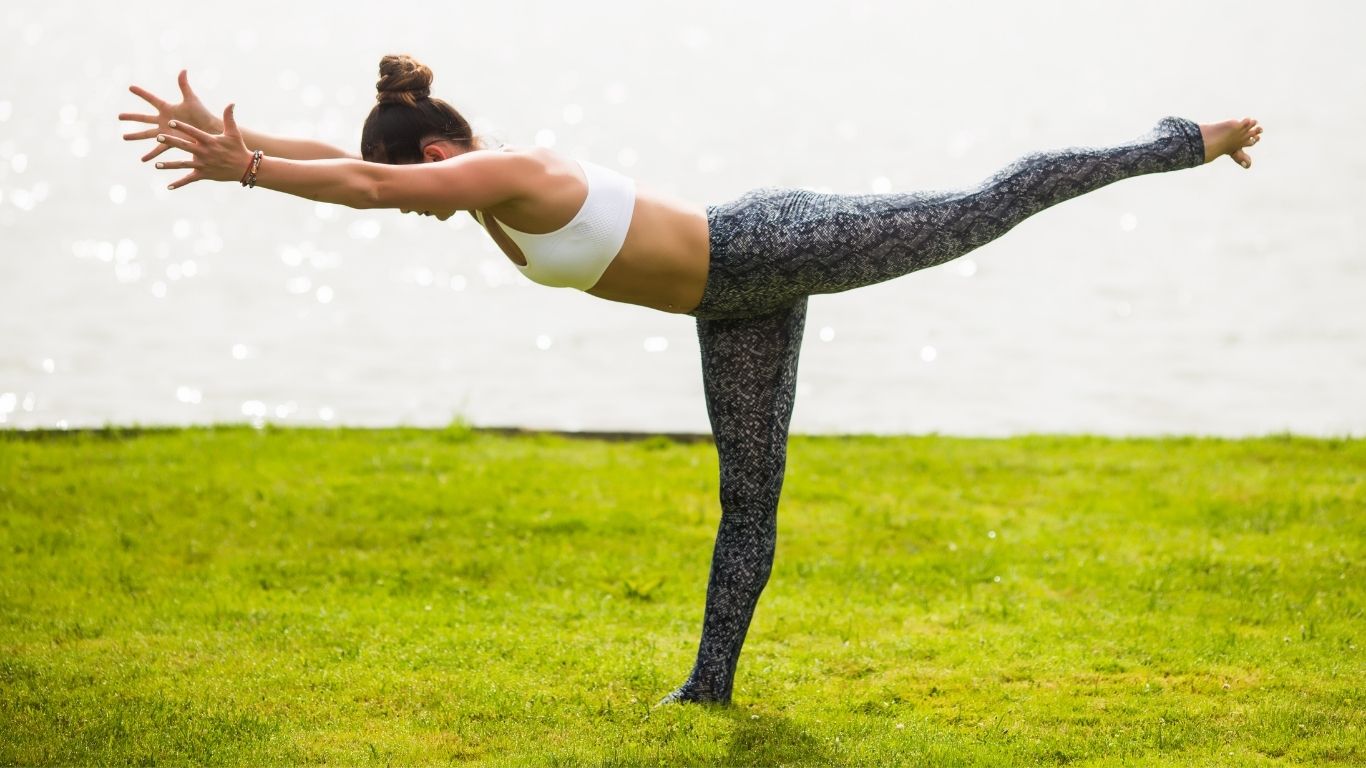
2. Warrior III (Virabhadrasana III)
Warrior III is a dynamic balance pose that engages the entire body, focusing on your core, legs, and arms.
How to do it:
- Begin in a standing position and step one foot back.
- Lift the back leg, keeping it straight while lowering your torso forward, aiming to create a straight line from head to heel.
- Extend your arms forward or to the sides for added stability.
- Hold the position and repeat on the other leg.
Benefits: Warrior III enhances balance and strengthens the core, glutes, and legs.
3. Half Moon Pose (Ardha Chandrasana)
This pose challenges balance by requiring you to hold your body in a sideways position while balancing on one leg.
How to do it:
- Start in a standing position and step one foot back.
- Place your hand on the floor or a block, and lift the opposite leg up, keeping it straight.
- Open your chest and raise your top arm towards the ceiling.
- Keep your gaze forward or upward to maintain balance.
Benefits: It strengthens the legs, glutes, and core while enhancing coordination and stability.
4. Chair Pose (Utkatasana)
Chair Pose is an excellent way to strengthen the lower body and improve stability.
How to do it:
- Stand with your feet together and bend your knees as if you’re sitting in an invisible chair.
- Keep your chest lifted and extend your arms above your head, palms facing inward.
- Hold the position for as long as you can, keeping your weight evenly distributed in your feet.
Benefits: It strengthens the legs, core, and lower back while improving balance and endurance.
5. Eagle Pose (Garudasana)
Eagle Pose requires you to balance on one leg while wrapping the arms and legs around each other, which challenges both your physical and mental balance.
How to do it:
- Stand tall and bend your knees slightly.
- Lift one leg and cross it over the other, wrapping your foot around the standing leg.
- Cross your arms in front of you, and try to hook your palms together.
- Hold for several breaths before repeating on the other side.
Benefits: This pose improves concentration, balance, and joint mobility.
6. Boat Pose (Navasana)
Boat Pose is a great way to engage the core and build stability through the center of your body.
How to do it:
- Sit on the floor with your legs extended in front of you.
- Lean back slightly, lifting your legs off the ground, keeping your knees bent or straight.
- Extend your arms forward, keeping your torso at a slight angle.
- Hold for as long as you can, keeping your core engaged.
Benefits: Boat Pose strengthens the core, hip flexors, and spine, while improving balance.
7. Downward Dog (Adho Mukha Svanasana)
While primarily a stretching pose, Downward Dog also helps with balance and stability by engaging your arms, legs, and core.
How to do it:
- Start in a tabletop position with your hands and knees on the ground.
- Lift your hips towards the ceiling, forming an inverted V shape with your body.
- Keep your feet hip-width apart and your hands shoulder-width apart.
- Focus on pressing your heels towards the ground and your chest towards your thighs.
Benefits: This pose builds strength in the arms, shoulders, and legs while enhancing balance and stability.
8. Plank Pose (Phalakasana)
Plank Pose is a powerful core-strengthening pose that also improves stability and balance.
How to do it:
- Start in a push-up position, with your wrists aligned under your shoulders and your body in a straight line from head to heels.
- Keep your core engaged and your body still, avoiding any sagging in the lower back.
Benefits: Plank Pose strengthens the core, arms, and legs, and helps improve overall body stability.
9. Side Plank (Vasisthasana)
Side Plank is a variation of the plank pose that targets the obliques and helps with balance and stability.
How to do it:
- Start in a plank position.
- Shift your weight onto one hand and rotate your body to one side.
- Stack your feet and lift your top arm towards the ceiling.
- Hold the position and repeat on the other side.
Benefits: This pose strengthens the core, arms, and obliques while improving balance and stability.
10. Cat-Cow Pose (Marjaryasana-Bitilasana)
This gentle flow between two poses helps improve spinal flexibility and coordination while enhancing balance.
How to do it:
- Start in a tabletop position with your wrists under your shoulders and knees under your hips.
- Inhale as you arch your back (Cow Pose), and exhale as you round your back (Cat Pose).
- Continue to flow between the two poses, syncing your breath with movement.
Benefits: Cat-Cow Pose improves spinal flexibility, mobility, and balance, and helps alleviate back tension.
FAQ
Q1: How often should I practice these poses to improve balance?
A1: Practicing these poses 3 to 4 times a week can significantly improve your balance and stability. Consistency is key, but make sure to listen to your body and progress at your own pace.
Q2: Can yoga help prevent falls in older adults?
A2: Yes, yoga is excellent for improving balance and stability, making it a great practice for older adults to prevent falls. Many of these poses strengthen the muscles responsible for balance, enhance joint mobility, and improve body awareness.
Q3: How long should I hold each pose for optimal balance benefits?
A3: Hold each pose for 30 seconds to 1 minute, depending on your ability. Gradually increase the duration as you become more comfortable and stable in each pose.
Q4: Are these poses suitable for beginners?
A4: Many of these poses can be modified to suit beginners. For example, you can practice Tree Pose with your foot lower on your leg or use a block in Half Moon Pose for added support. Start with the basics and gradually work up to more challenging variations.
Q5: Can I improve my mental clarity by practicing these poses?
A5: Absolutely! Many of these poses not only enhance physical balance but also encourage mental focus and mindfulness. As you practice, you will develop a stronger connection between your body and mind, which can improve clarity and reduce stress.
Conclusion:
Yoga poses for balance and stability are a great way to improve your physical and mental well-being. By incorporating these ten poses into your routine, you can strengthen your core, legs, and arms, while boosting your overall stability. Whether you’re a beginner or experienced yogi, these poses can be adapted to your fitness level, and with regular practice, you’ll notice significant improvements in your balance and coordination.